
AAV analytics accelerated with mass photometry
Fast, informative AAV analytics for every stage of development
Adeno-associated viruses (AAVs) are the leading viral vectors in clinical gene therapy. However, fast, cost-effective, and accurate characterization of purity – quantifying empty, partially filled, full, and overfilled capsids – is difficult or impossible with traditional methods. Mass photometry (MP) delivers accurate, label-free quantification of all capsid populations, using minimal sample and producing results in minutes.
Key pain points encountered by scientists during process optimization and GMP manufacturing:
Limited upstream insight
Vector genome/ viral particle (VG/VP ratios) – widely used in early development stages – cannot distinguish empty, partially filled, full, and overfilled capsid populations, limiting true process understanding and informed decision making.
Slow, sample-intensive analytics
Time-intensive, sample-heavy analytical methods prevent efficient process optimization – particularly in early development, where AAV material is scarce and costly.
Cost and GMP compatibility constraints
To balance cost-effectiveness, sample economy, and GMP compatibility in both process development and release testing, teams use multiple assays – driving up costs, complexity, and timelines.
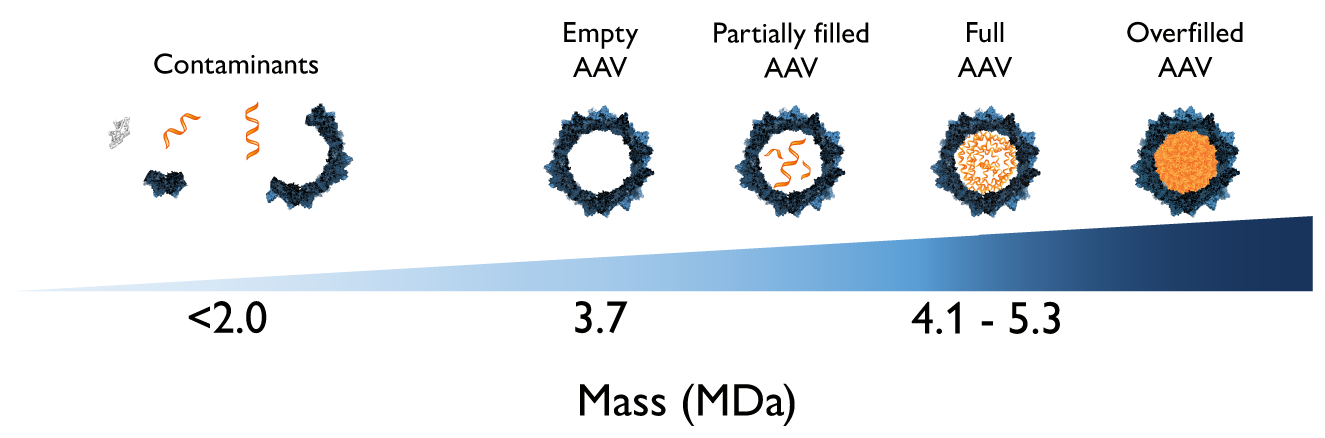
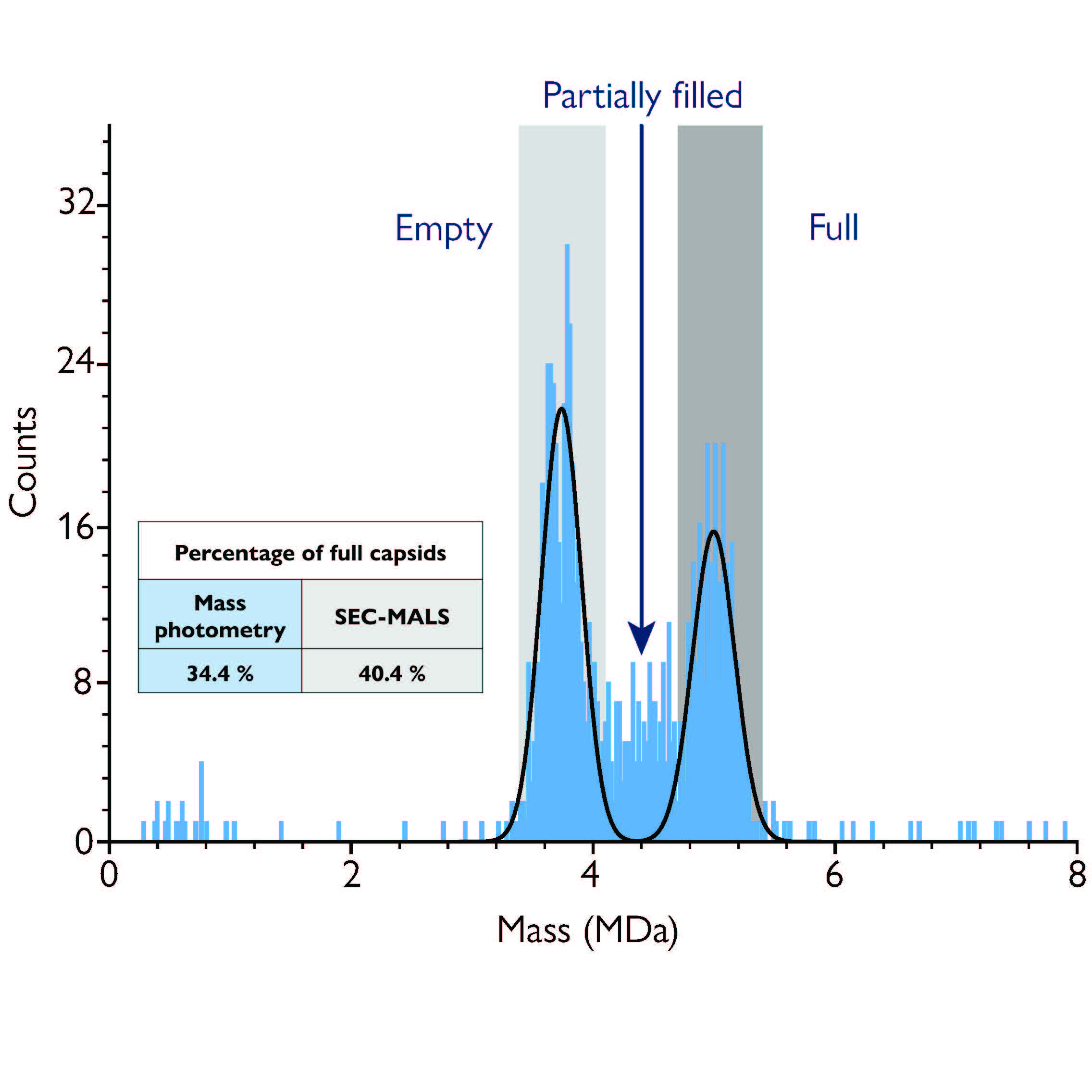
Figure 1.Mass photometry (MP) resolves heterogeneous AAV populations based on molecular mass. The schematic (top) illustrates the progression from contaminants and empty capsids to partially filled and full particles, while the histogram (bottom) shows separation of these populations by MP. Quantification of full capsids aligns well with SEC-MALS, with MP providing single-particle resolution of capsid heterogeneity.
Challenges
Reliable capsid content analysis – how upstream uncertainty threatens quality
One of the greatest challenges in AAV process optimization and production is obtaining early, accurate insight into capsid packaging efficiency in upstream samples. At this stage, reliable capsid profiling is particularly difficult because crude lysates are complex to analyze. As a result, teams typically rely on VG/VP (vector genome/ viral particle) ratios derived from qPCR and ELISA to infer capsid content. Traditional techniques – AUC, TEM, SEC-MALS, and CDMS – often struggle with sample heterogeneity, require extensive preparation, and are impractical for rapid decision-making. As a result, teams typically rely on VP/VG (viral protein/vector gene) ratios derived from ELISA and qPCR to infer capsid content. This indirect approach lacks the resolution to distinguish empty, partially filled, full, and overfilled capsids, increasing the risk of optimizing yield at the expense of product quality. Empty capsids introduced upstream are notoriously difficult and costly to remove during downstream processing.
Mass photometry (MP) addresses this critical gap by enabling direct, label-free quantification of all capsid populations at the upstream stage with minimal sample clarification (taking only 1–3 hours). Find out more from this infographic which outlines how upstream implementation supports better process control, reduces batch variability, and enhances overall product quality. Stereotype-agnostic and fast, MP works with any AAV serotype without assay redevelopment, conserving valuable upstream material and delivering results in minutes.
By giving scientists early visibility into this critical quality attribute (CQA), MP ensures that process optimization decisions are guided not only by yield, but by true product quality – at a stage when corrections are easiest and most cost-effective to make.
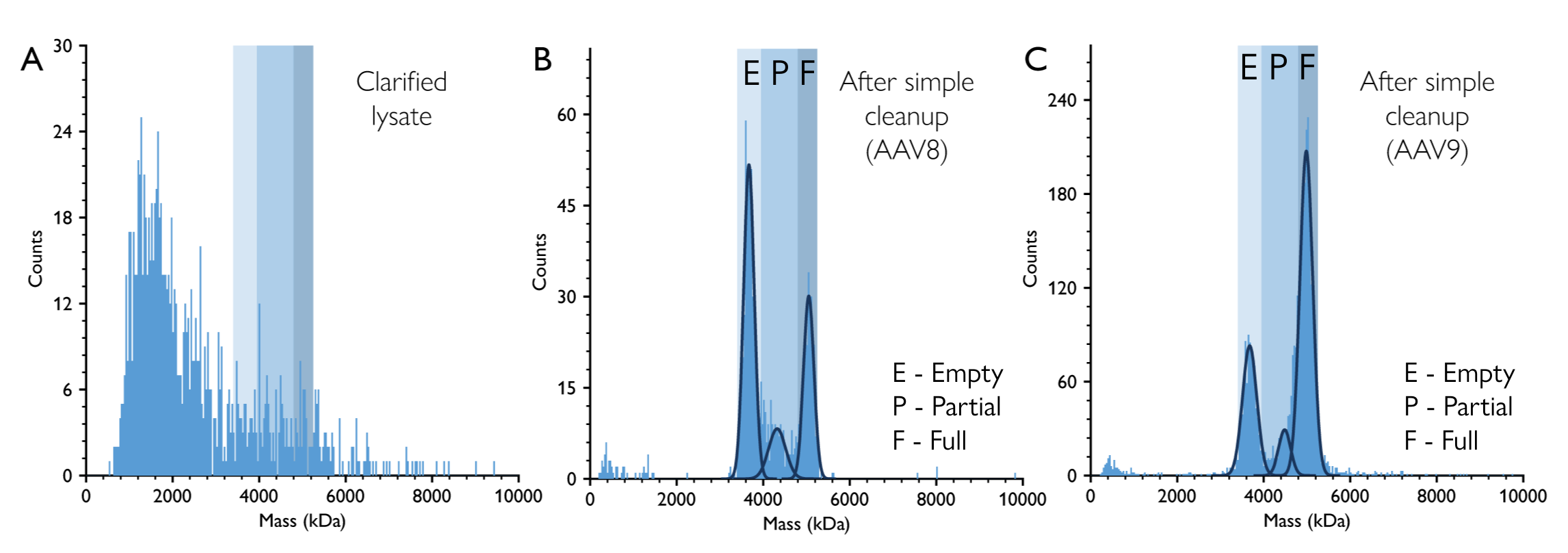
Figure 2. Combined with small-scale purification (simple cleanup), MP enables monitoring of AAV purity during upstream optimization. Example shows MP analysis of clarified lysate before purification (A), and after simple sample cleanup for AAV8 (B) and AAV9 (C) serotypes. Data collected by Généthon using a Samux™ mass photometer. To learn more, see Upstream AAV characterization with mass photometry: Application note and Protocol.
Cost- and resource-efficient optimization
Even when an AAV process ultimately achieves strong productivity, high yields, and a high percentage of full capsids, the path to optimization is rarely linear. In practice, reaching the desired performance often requires multiple experimental iterations, spanning both upstream and downstream development, with numerous conditions tested in parallel. These iterations significantly increase time, cost, and material consumption.
As gene therapies move closer to commercialization, the impact of these inefficiencies becomes clear: Every microliter of AAV material has tangible value, and analytical strategies must be designed to preserve it. Analytical methods are needed across the entire optimization workflow up to 180 minutes based on protocol, and must be fast, cost-effective, and information-rich.
MP supports near real-time decision-making during process optimization. It dramatically reduces sample consumption, requiring only 10 µL of sample at 1 × 10¹¹ VP/mL – up to tenfold less material than typical ELISA-based assays. Data acquisition can be completed in under 5 min per sample, and as little as 90 minutes for 24 samples using automated workflows* – all supported by intuitive software and minimal data analysis requirements.
Routine MP offers far more than capsid population quantification alone. In a single, rapid measurement, it enables genome length estimation across differently filled populations within a defined mass range. This breadth of insight allows scientists to assess multiple quality-relevant attributes from a single, rapid measurement.
By delivering rapid, high-value insight while conserving precious material, MP enables scientists to optimize processes faster, reduce development costs, and protect product quality without compromising on analytical depth.
*Up to 180 minutes based on protocol
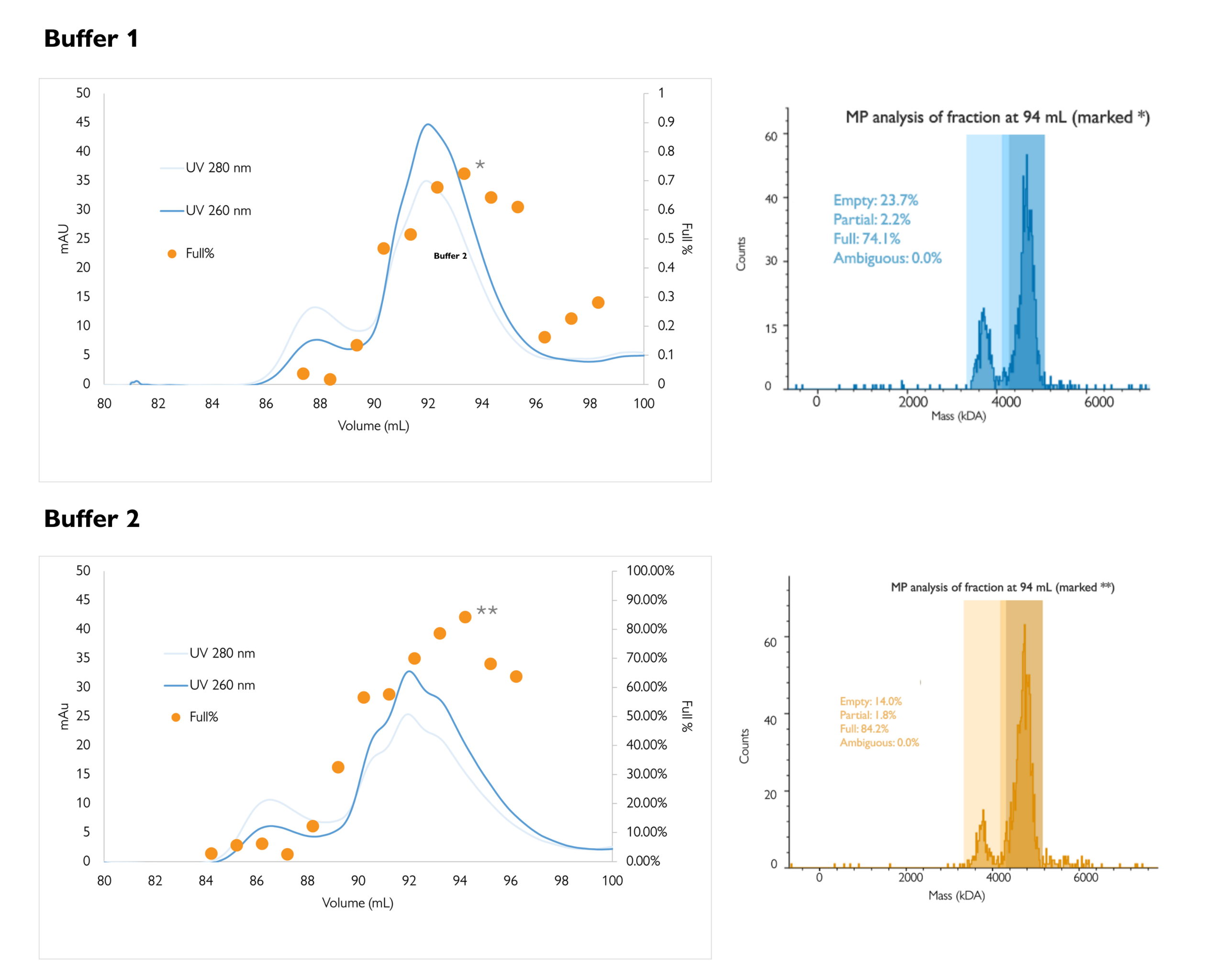
Figure 3. At-line monitoring of AAV purification using mass photometry. Chromatography UV traces are overlaid with the percentage of full capsids measured by MP to identify fractions enriched in full AAV particles under different buffer conditions. The accompanying histograms show the MP-resolved capsid populations within selected fractions, enabling direct visualization of empty, partial, and full particles and supporting optimization of downstream purification.
| AUC | CDMS | MP | SEC-MALS | UV (A260/280) | |
|---|---|---|---|---|---|
|
%
Full particles |
91% |
80% |
91% |
98% |
95% |
|
% Partially filled particles |
6.4% |
15.7% |
3.2% |
— |
— |
|
Molecular
Weight of full
particles (MDa)
|
— |
4.79 |
4.53 |
4.56 |
— |
Table 1. Analysis of the USP AAV8 (Full) standard – comparing MP to complementary analytical techniques for quantifying % full and % partially filled (where available) capsids, and measuring molecular weight (where available). The close agreement of MP with AUC highlights MP’s value as a highly accurate and reliable approach for assessing AAV purity. Adapted from: USP Biologics (2025). Application note. AAV8 Reference Standards: revolutionizing empty/full capsid analysis.
Overcoming the cost and complexity of GMP-ready AAV analytics
Gene therapies are ultimately developed for clinical approval and patient use, yet many analytical methods used in GMP environments today are expensive, complex to use, and slow. These challenges directly contribute to the high cost of gene therapies and slow progression from development to clinic.
MP addresses this gap by delivering reliable, low-cost AAV analytics that support GMP readiness from early development through to QC release testing. Enabled by GMP-ready instrumentation and fully 21 CFR Part 11–compliant software, MP enables consistent, regulatory-aligned characterization of AAV capsid populations using minimal sample volume and streamlined, user-friendly workflows.
MP has demonstrated strong reliability for AAV purity analysis and has been recognized by major regulatory and standards-setting bodies, including the United States Pharmacopeia (USP), British Pharmacopeia, and Chinese National Institute for Food and Drug Control. The USP identified MP as a suitable method for AAV purity assessment, using it alongside established techniques to characterize its full and empty AAV reference standards (Table 1).
By combining regulatory alignment, speed, and affordability, MP enables scalable, GMP-compatible analytics that support both innovation and compliance in gene therapy development.
Mass photometry solutions for AAV vector analytics
Refeyn SamuxMP & SamuxMP Auto
Samux™ mass photometers are optimized for fast, accurate AAV characterization across all development stages.
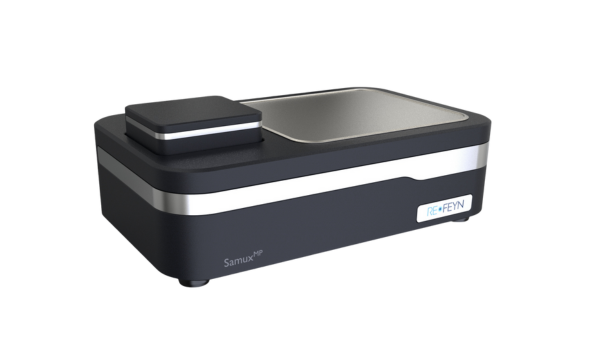
SamuxMP quickly and accurately measures full-to-empty capsid ratios, as well as partially filled and overfilled capsid populations, across all AAV serotypes. It can also estimate genome length for differently filled populations, estimate capsid titer, and as part of the standard data analysis procedure.
Designed to meet the key challenges of AAV analytics, SamuxMP offers:
Accurate measurement of capsid ratios
Quantifies empty, partially filled, full and overfilled capsids – even upstream with a quick cleanup.
Speed and low sample consumption
Delivers results in 5 min (SamuxMP) or in as little as 90 min for 24 samples (SamuxMP Auto)*. Uses microliter-scale sample volumes at 1 × 10¹¹ VP/mL.
Acceleration of GMP readiness
Reliable AAV analytics from discovery to QC release, with regulatory recognition by USP, BP and NIFDC.
*Up to 180 minutes based on protocol
MassGlass™ UC slides are high-quality measurement surfaces designed for mass photometry.
MassGlass™ UC slides provide an out-of-the-box, ready-to-use solution that delivers reliable and consistent performance for AAV measurements.
Refeyn offers MassGlass™ UC Sample Prep Kits for the Samux™ and Samux™ Auto systems, delivering everything you need for a smooth, ready-to-run workflow and effortless, high-quality AAV measurements.
Key advantages include:
Ready-to-use format
Enables effortless AAV analysis with a true out-of-the-box workflow.
Guaranteed quality
Provides consistently accurate, high-quality AAV data with minimal effort.
Serotype agnostic
Universal compatibility for all AAV serotypes, enabling parallel analysis of multiple AAV serotypes within a single workflow.
Software for data acquisition, analysis, and GMP compliance
Refeyn provides a complete, end-to-end software suite for both process development and GMP-compliant environments.
Designed to streamline data acquisition and interpretation, this software suite enables rapid, high-quality measurement with clear user guidance and powerful analytical tools. Supported by a fully GMP-compliant platform, it empowers researchers working with AAV samples to make fast, confident, and data-driven decisions. Two tailored solutions are available for research and process development:
For research and process development:
AcquireMP – optimized for intuitive, efficient data acquisition
DiscoverMP – advanced analysis and interpretation for R&D workflows
Together, these tools support fast, confident decision-making across development stages.
For 21 CFR Part 11 compliance
Refeyn also offers a complete GMP-compliant software environment aligned with FDA 21 CFR Part 11 and EU GMP Annex 11 requirements.
It includes:
AcquireMP – secure data acquisition
EvaluateMPS – analysis within a GMP-compliant environment
ManageMP – system configuration, user management, and full audit trails
Together, these software packages provide a robust, validated framework for regulated environments – ensuring data integrity, traceability, and compliance from acquisition through to analysis.
Mass photometry is recognized by regulatory authorities
Mass photometry, enabled by GMP-compliant software, is increasingly being recognized by leading regulatory bodies as a robust, reliable method for characterizing AAVs and gene therapy products. Using GMP-compliant software ensures that critical quality attribute (CQA) measurements are fully auditable and suitable for regulated workflows.
In recent years, authorities in Europe, Asia, and North America have highlighted mass photometry’s value in assessing CQAs such as empty, partially-filled, full and overfilled capsids in rAAV products. These endorsements underscore mass photometry’s growing role globally in process development, quality control, and at-line monitoring for advanced therapies.
The ISO standard for Biotechnology – Gene Delivery Systems (16921-2), published in 2026, specifies minimum requirements for quantifying viral vectors in terms of physical titer and their associated activity. It lists mass photometry as an approved method for determining AAV capsid content.
USP Headline?
In 2025, the U.S. Pharmacopeia (USP) recognized mass photometry as a method to measure empty, full and partial capsids in rAAV products in their chapter, <1067> Best Practices for the Manufacture and Quality Control of Recombinant Adeno-Associated Virus Gene Therapy Products.
https://doi.usp.org/USPNF/USPNF_M19095
They introduced AAV8 (Empty Capsids) and AAV8 (Full Capsids) reference standards, using mass photometry alongside CD-MS and AUC to characterize the percentages of empty, full, and partially filled capsids in the standards.
Application note – AAV8 Reference Standards: revolutionizing empty/full capsid analysis
The USP also included mass photometry in its Gene Therapy Analytical Guide in 2025, for analysis of the Product Purity CQA Capsid Content (Empty/Full).
https://genetherapyanalyticalguide.usp.org/process-product-characterization/301


Headline 3?
In 2024, the British Pharmacopeia included mass photometry in its Advanced Therapy Medicinal Products (ATMP) Guidance on Characterisation of the Capsid Particle Population in rAAV Products. In its section on empty/full characterization methods, it describes mass photometry as a “viable option for at-line process monitoring.”
Mass photometry in the AAV literature
Resources
Harnessing the power of mass photometry to accelerate AAV analysis
Find out why mass photometry is becoming the go-to choice for AAV analysis in this Mass Photometry Masterclass: Harnessing the power of mass photometry to accelerate AAV analysis.
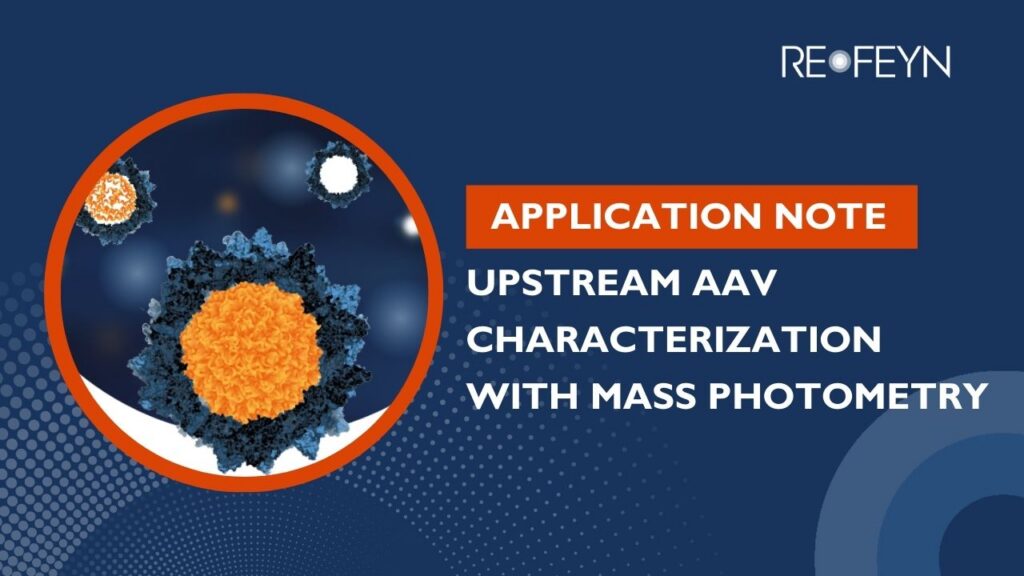
Upstream AAV characterization with mass photometry
Check out this app note to learn a rapid, plate-based lysate cleanup and mass photometry workflow that delivers 3-hour AAV quality results—measuring empty, partial, and full capsids for smarter upstream decisions.
Trusted at single-particle resolution: Mass photometry for AAV capsid content analysis
Watch this on-demand webinar to learn how mass photometry (MP) quantifies AAV capsid populations without labels, using minimal sample and delivering results in minutes. You’ll also see how MP data compares with analytical ultracentrifugation (AUC).

Comparing analytical approaches for AAV characterization
Explore this article to understand key AAV characterization methods—covering strengths and trade-offs across EM, AUC, CDMS, qPCR-ELISA, SEC-MALS and mass photometry—to support confident assessment of critical quality attributes.
Streamlining AAV analytics in gene therapy manufacturing workflows
Read this whitepaper to learn how Refeyn’s SamuxMP software package for GMP-regulated environments complies with GMP manufacturing regulations.
USP AAV standards to support quality testing and characterization
Learn about USP AAV reference standards and Pharmaron’s use of mass photometry to streamline AAV development, optimize capsid purification, and complement other analytical techniques in large-scale manufacturing.
Adoption of new technologies in CGT manufacturing: challenges and drivers
This expert-led roundtable explores the key factors driving and hindering the adoption of new analytical and process technologies in cell and gene therapy (CGT) manufacturing. Industry experts will share insights on integrating innovative tools with established methods, navigating regulatory expectations, and balancing scalability, compliance, and risk management in evolving CGT workflows.
Frequently asked questions
Why is measuring the empty/partially filled/full/overfilled capsid ratio important in AAV production?
The empty/partially filled/full/overfilled capsid ratio is a Critical Quality Attribute (CQA) that reflects vector quality and potency because full capsids contain therapeutic DNA while empty ones do not.
How quickly can mass photometry analyze AAV samples?
Mass photometry measurements take one minute. An experiment can be prepared, collected and analyzed in under 5 minutes. With automated mass photometry (the SamuxMP Auto) 24 samples can be measured in as little as 90 minutes.
How much sample is needed for mass photometry AAV analysis?
Mass photometry requires very small sample volumes (typically ~10 µL) and can work with capsid titers around 10¹¹ Viral particles/mL or lower, preserving valuable material.
Is mass photometry suitable for all AAV serotypes?
Yes, mass photometry is serotype-agnostic, meaning it can measure AAV capsids of any serotype without protocol changes.
Is mass photometry suitable for both development and GMP environment?
Yes, mass photometry is widely used in process development, and it is compatible with GMP environments, supported by regulatory recognition and software that enables consistent quality control workflows. To learn more, read our white paper, AAV analytics in GMP-regulated environments.
How does mass photometry compare to other analytical methods?
Compared to techniques like AUC, TEM, or CDMS, mass photometry is faster, uses less sample, simpler to operate, cheaper and provides comparable quantification of capsid populations. To learn more, read our article, Comparing analytical approaches for AAV characterization (2026) – Refeyn
Can mass photometry estimate AAV genome size?
Mass photometry determines AAV genome length by measuring the mass difference between empty capsids and capsids containing packaged DNA. The additional mass from the encapsulated genetic material is measured and converted to genome length by dividing by the average nucleotide mass. To learn more, read our app note, Measuring AAV genome length with mass photometry.
Has mass photometry been recognized by regulatory standards bodies?
Yes, mass photometry has been acknowledged by organizations such as the United States Pharmacopeia (USP), British Pharmacopoeia (BP) and National Institute for Food and Drug Control in China (NIFDC) as a valid method for AAV capsid content characterization. The US National Institute of Standards and Technology (NIST) has also assessed MP, among other orthogonal methods, as a method for measuring AAV capsid titer.
Is mass photometry automated, or does it require hands-on operation?
Mass photometry systems are available in both manual (SamuxMP) and fully automated (SamuxMP Auto) formats. Manual instruments require only minimal pipetting, while fully autonomous systems can analyze up to 24 samples in as little as 90 minutes*, enabling unattended, high-throughput operation.
*up to 180 minutes based on protocol
What other AAV parameters can be measured using mass photometry?
Besides analyzing the purity of AAV samples, mass photometry enables estimation of genome length within differently filled populations, capsid titer estimation, to a defined molecular weight range.
How does MP compare to other technologies, such as AUC and CDMS?
Mass photometry shows excellent agreement with established orthogonal methods such as AUC and CDMS. This has been demonstrated in multiple peer-reviewed publications and in data generated as part of documentation aligned with the United States Pharmacopeia (USP) standard, confirming that MP delivers results consistent with mentioned techniques. To learn more, read our article, Comparing analytical approaches for AAV characterization.
Can MP also measure the empty/full (E/F) ratio of adenoviruses?
Standard mass photometry is not suitable for large viral vectors such as adenoviruses and lentiviruses. However, this capability is enabled by macro mass photometry, implemented in the KaritroMP instrument, which is specifically designed to analyze larger particles. You can learn more about lentivirus analytics with macro mass photometry, or read our app note to learn about analysis of adenovirus full/empty ratios.